
Features
Detroit shop-floor skill glossary for cost and cycle time
A skill glossary for Detroit shop-floor terms, including bill of materials, work in process, takt time, cycle time, standard cost and first-pass yield.
What to take away
- This skill glossary covers five terms Detroit shop floors use every shift: bill of materials, work in process, takt time, standard cost and first-pass yield.
- Bill of materials lists what a unit consumes; work in process is the value sitting on the floor between stations.
- Takt time is set by customer demand and available time, while cycle time is what one station actually takes.
- Standard cost is a planned number for accounting, so it hides overtime, scrap and expedited freight unless you reconcile it.
- First-pass yield counts only units that passed without rework, which is why rework deserves its own line.
- BLS business cost statistics give you an outside benchmark for wages, benefits and productivity in Michigan plants.
Five words Detroit operations floors use every shift
A Detroit plant manager can walk the floor at 6 a.m. and hear all five terms before the first break. A machinist asks whether the bill of materials still calls out the right casting. A supervisor asks how much work in process is parked by the paint line.
Someone checks takt time against the day's build schedule. Accounting emails about standard cost variances. Quality posts first-pass yield for the previous shift.
The vocabulary matters because Detroit manufacturing runs on tight margins and short customer windows. Automotive tier suppliers, tool and die shops, and the small machine shops scattered from Hamtramck to Livonia all quote work the same way. If you cannot say what a part costs and how long a station takes, you cannot defend a price.
These terms also travel beyond automotive. Food processors on the east side, medical device shops in Ann Arbor, and contract packagers in Warren use the same five words. The definitions below are written for owners and supervisors, not for accountants.
One warning before the definitions. Each term has a shop-floor meaning and an accounting meaning, and the two do not always match. Most cost arguments in a small plant are really arguments about which meaning is in play.
Bill of materials and work in process, defined against inventory
A bill of materials definition is simple: it is the itemized list of every part, raw material and subassembly needed to build one unit, with quantities. A bicycle maker's bill of materials lists two wheels, one frame, one chain and so on.
A Detroit stamping supplier's bill of materials for one bracket might list coil steel by weight, two fasteners, a coating and a label.
Inventory is the broader word. It covers raw material, work in process and finished goods. The bill of materials tells you what should be consumed per unit. Inventory tells you what is physically on the shelf or floor right now.
When the two disagree, you have scrap, misplacement, wrong counts or a bill of materials that was never updated after an engineering change.
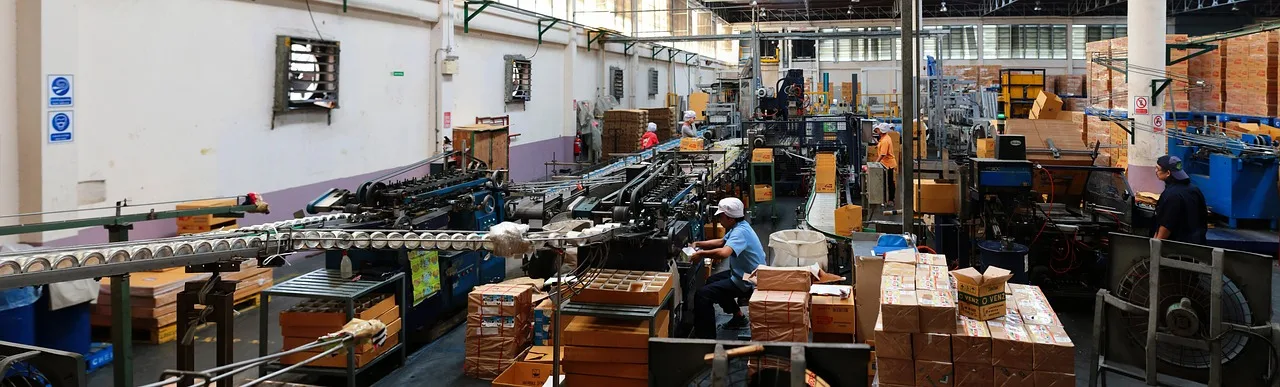
Work in process is everything that has started production and is not yet finished. On a Detroit floor that might be 400 axle housings between welding and painting, or a rack of partially assembled pumps waiting on a bought-out seal.
Work in process ties up cash. It also hides defects, because a flaw found three stations later costs more to fix than one caught immediately.
A practical rule: count work in process at the same time every day, at the same stations. A daily count turns a vague feeling about the floor into a number you can act on. Owners who track that number alongside their income statement, balance sheet and cash flow statement can compare the floor with their financial records.
Bill of materials and work in process
| Term | What it counts | Where it lives |
|---|---|---|
| Bill of materials | Parts and quantities per finished unit | Engineering and planning system |
| Raw material inventory | Unconsumed stock | Receiving and racks |
| Work in process | Units started but not finished | The floor, between stations |
| Finished goods | Completed, sellable units | Shipping and warehouse |
| Standard cost | Planned cost per unit | Accounting system |
Takt time against cycle time: the distinction that changes a schedule
The takt time vs cycle time distinction trips up more supervisors than any other pair of words. Takt time is the pace the customer demands. Divide available production time by customer demand for that period. If a Detroit customer wants 480 units in a 480-minute shift, takt time is one minute per unit.
Takt Time vs Cycle Time
Takt time
- What it measures
- Customer demand
- How to calculate
- Time / demand
- Example
- 1 min per unit
- If longer
- Cannot meet demand
- If shorter
- Overstaffed station
Cycle time
- What it measures
- Your process
- How to calculate
- Actual station time
- Example
- 40 sec per part
- If longer
- Add shift or machine
- If shorter
- Move labor elsewhere
Cycle time is how long one station or one machine actually takes to complete its work on one unit. It is a measurement of your process, not of demand. A press that stamps a part every 40 seconds has a 40-second cycle time regardless of what the customer wants.
The comparison drives decisions. If cycle time is longer than takt time, you cannot meet demand on one shift with that equipment. You add a shift, add a machine, reduce the work content or renegotiate the date. If cycle time is much shorter than takt time, you are overstaffed at that station and should move labor elsewhere.
Takt time is also a planning number, not a target for every station. Support work like inspection and material handling does not have to match takt. The rule applies to the constraint, the station that limits output. Fix the constraint first, then rebalance.
In a small Detroit shop, the constraint is often a single welder or a single CNC machine. Knowing takt time tells you whether that machine can carry the order. Knowing cycle time tells you what it costs to try.
When the answer is unclear, a short trial run on one order is cheaper than rebuilding a line. Business vocabulary tools can help the team use terms consistently.
Standard cost and what it hides about actual cost
Standard cost is a predetermined cost per unit, built from expected material prices, expected labor time and expected overhead. Accounting uses it to value inventory and to spot variances. A Detroit parts maker might carry a standard cost of $18.40 for a bracket, then compare actual results against that figure each month.
The standard is a plan, not a truth. It hides overtime paid to recover a late order. It hides expedited freight on a shortage. It hides scrap above the expected allowance and the labor spent reworking bad parts. Those costs land in variance accounts, and in a small plant nobody reads variance accounts closely.
A useful discipline is to compare standard cost against actual cost for your ten highest-volume parts every quarter. List material, direct labor, overtime premium, scrap and freight separately. The gap is your real margin leak. Compare it with cash flow and profitability using business metrics to catch pricing problems before the annual review.
Standard cost also interacts with wages. Direct labor in a Detroit shop is rarely just the hourly rate. Payroll taxes, workers' compensation, paid time off and shift premiums all attach to it.
The FLSA minimum wage and overtime rules govern overtime, exempt status and recordkeeping, so a supervisor who schedules Saturday work is making a cost decision with legal edges.
Rebuild the standard when material prices move more than a few percent or when a process change alters labor content. A stale standard makes every variance report misleading.
First-pass yield and why rework is a separate number
First-pass yield is the share of units that meet specification the first time through, with no rework, no repair and no re-inspection. If 1,000 units start and 940 pass clean, first-pass yield is 94 percent. The other 60 units may eventually ship, but they shipped through extra labor.
Rework Cost in One Week
- 2,000housings run
- 91%first-pass yield
- 180units needing rework
- 36labor hours at 12 min each
That is why rework is a separate number. Overall yield can look healthy while first-pass yield is poor, because rework hides the problem inside the plant. Rework consumes capacity, adds touch labor, risks secondary damage and delays orders. It also distorts cycle time, since the station is busy fixing old parts instead of making new ones.
Track first-pass yield by station, not just by plant. A single bad fixture can drag one press below 80 percent while the plant average stays near 95. Station-level data tells you where to send a maintenance tech on Monday morning.
Pair first-pass yield with scrap rate. Scrap is material you cannot recover. Rework is material you can recover at a cost. The two need different fixes: scrap points to process capability or incoming quality, while rework points to training, tooling or inspection standards.
A simple worked example. A Detroit shop runs 2,000 housings in a week. First-pass yield is 91 percent, so 180 units need rework at 12 minutes each, or 36 labor hours. At a fully loaded rate near $38 an hour, that is roughly $1,368 of recoverable cost in one week.
Fixing the fixture that causes half the defects pays for itself quickly.
Reading BLS business cost statistics against a Michigan plant example
The U.S. Bureau of Labor Statistics publishes the cost, wage and productivity data that shop owners otherwise guess at. The agency's Overview of BLS Statistics on Business Costs is the entry point for cost and cycle-time vocabulary.
Its BLS Glossary of cost terms defines cost, productivity and throughput in short numbered entries. Both are free.
Use the data as a benchmark, not a verdict. Suppose a Michigan plant with 40 production employees pays an average of $22 an hour. National or regional BLS figures for similar production occupations let you see whether that rate is high, low or ordinary for the work.
They also break out benefits, which owners routinely underestimate when quoting a job.
Productivity figures help with cycle time arguments. If your output per labor hour has been flat for three years while your wages rose, the gap is coming out of margin. That is a fact you can bring to a pricing conversation with a customer, and it is stronger than an opinion.
BLS data is also useful for planning. Wage trends inform next year's standard cost. Benefit trends inform your overhead rate. Productivity trends tell you whether a capital purchase is justified. Pull the numbers once a quarter and keep a short file.
One caution: BLS categories are broad, and a Detroit job shop may not match any single published series exactly. Compare ranges and directions rather than decimals. The value is in knowing where your plant sits against the pack, not in matching a national average to the cent.
Where Detroit small business support meets manufacturing vocabulary
Detroit's manufacturing revival has produced a layer of support organizations that speak both shop floor and balance sheet. Michigan's Small Business Development Centers, the SBA district office in Detroit, and SCORE mentors work with owners on pricing, costing and cash flow. Most of that help is free or low cost.
Come to those meetings with numbers. A mentor can help you price a job only if you bring cycle time, first-pass yield and a real standard cost. Owners who arrive with a bill of materials and a work in process count get useful answers in one session instead of five.
The vocabulary also connects to how you read your own books. Cost and yield affect the financials. Understanding profit against cash explains why a profitable month can still leave you short on payroll.
A business acumen guide can help you evaluate one purchase, from why you need it to its effect on cash.
Checklist before quoting a Detroit job:
- Bill of materials updated for the current revision
- Cycle time measured at the constraint station, not estimated
- Takt time calculated from the customer's required date
- Standard cost refreshed for current material and wage rates
- First-pass yield and rework hours pulled for the last ten runs
- Freight, overtime and scrap allowances stated in the quote